
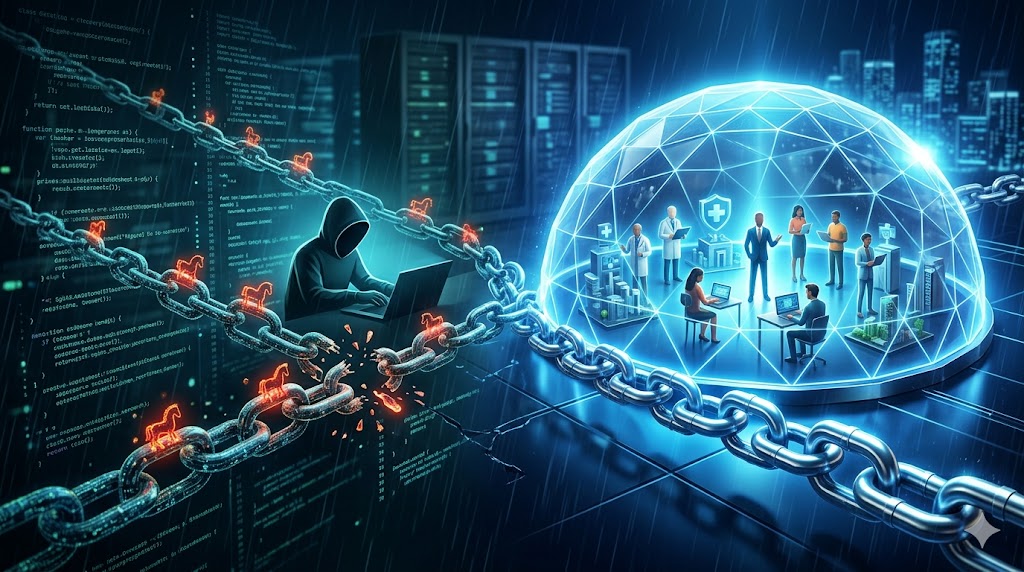
The digital landscape just shifted, and if you aren’t paying attention, your entire ecosystem might already be compromised. A massive supply chain attack recently struck Axios, a library with over 80 million weekly downloads. This wasn’t a direct hit on a website; it was a surgical strike on the very tools developers use every day.
The Anatomy of the Attack
The breach occurred when a maintainer’s account was compromised, allowing attackers to inject a malicious dependency called plain-cryptojs. This package served one purpose: executing a post-install script that downloads a Trojan to exfiltrate your most sensitive data—API keys, credentials, and crypto tokens.
If you ran npm install or update in the last 48 hours, your local machine, MacBook, or VPS could be a “functional asset” for hackers instead of CTS.
Why Legacy Security Fails
Traditional firewalls can’t stop what you invite into your system. This attack leveraged:
- Trusted Publishing Gaps: Even with “Trusted Publishing” enabled, long-lived tokens allowed the malicious version to bypass standard GitHub checks.
- AI-Generated Malware: The barrier to entry for these attacks is dropping as AI makes crafting obfuscated, malicious scripts easier than ever.
- The “Shadow” Dependency: You didn’t install the malware; your trusted library did.
The CTS Fortress Strategy: Beyond the Firewall
At Creative Tech Solutions, we don’t just “stop” threats—we engineer resilience. Our Cybersecurity Lead, Blackshield, operates on a Zero-Trust Methodology. Here is how we protect our disciples:
- Minimum Release Age Protocols: We don’t chase the “latest” version blindly. We implement thresholds (using tools like Bun or PNPM) to ensure package versions are vetted by the community for at least 3–7 days before they touch our production environment.
- Secret Orchestration: We never store API keys in
.envtext files. We use encrypted, injected environment variables to ensure that even if a Trojan scans your files, it finds nothing but static. - Isolated Dev Environments: By using Docker containers or remote VPS via SSH, we ensure the “blast radius” of any compromise is contained, keeping your primary system passwords and personal data invisible to the attacker.
The Offer: Don’t Be a Statistic
Most breaches begin with a single human mistake or a “hidden” dependency. Our Penetration Testing team simulates these exact supply chain maneuvers to find your vulnerabilities before the “flesh-based” hackers do.